

Improving on Workflow with Deep Learning Reconstruction
Dr. Mark Kon, Consultant Radiologist at the Bradford Royal Infirmary, UK, has worked with Canon Medical’s Aquilion Prime SP since the launch of the Second Edition and has seen the benefits from iterative reconstruction that are possible with Adaptive Iterative Dose Reduction (AIDR) 3D. Powered by Altivity, the Deep Learning Reconstruction (DLR) in Canon’s Advanced intelligent Clear-IQ Engine (AiCE) builds upon AIDR 3D technology to bring even greater gains in dose reduction, as well as image quality.
AiCE harnesses the enormous computational power of a Deep Convolutional Neural Network (DCNN) algorithm. It is trained to differentiate signal from noise, so that it can suppress noise and enhance signal. It can differentiate and produce images of high spatial resolution. Training involves advanced statistical Model Based Iterative Reconstruction (MBIR). However, unlike MBIR, AiCE Deep Learning Reconstruction is part of Canon Medical's Altivity suite of solutions, leveraging AI to overcome challenges of image appearance and/or reconstruction speed when used in a clinical setting.
“From my perspective, AIDR 3D already delivers low dose imaging, but AiCE builds upon this to provide better quality images for the same or even lower radiation dose,” remarked Dr. Kon.
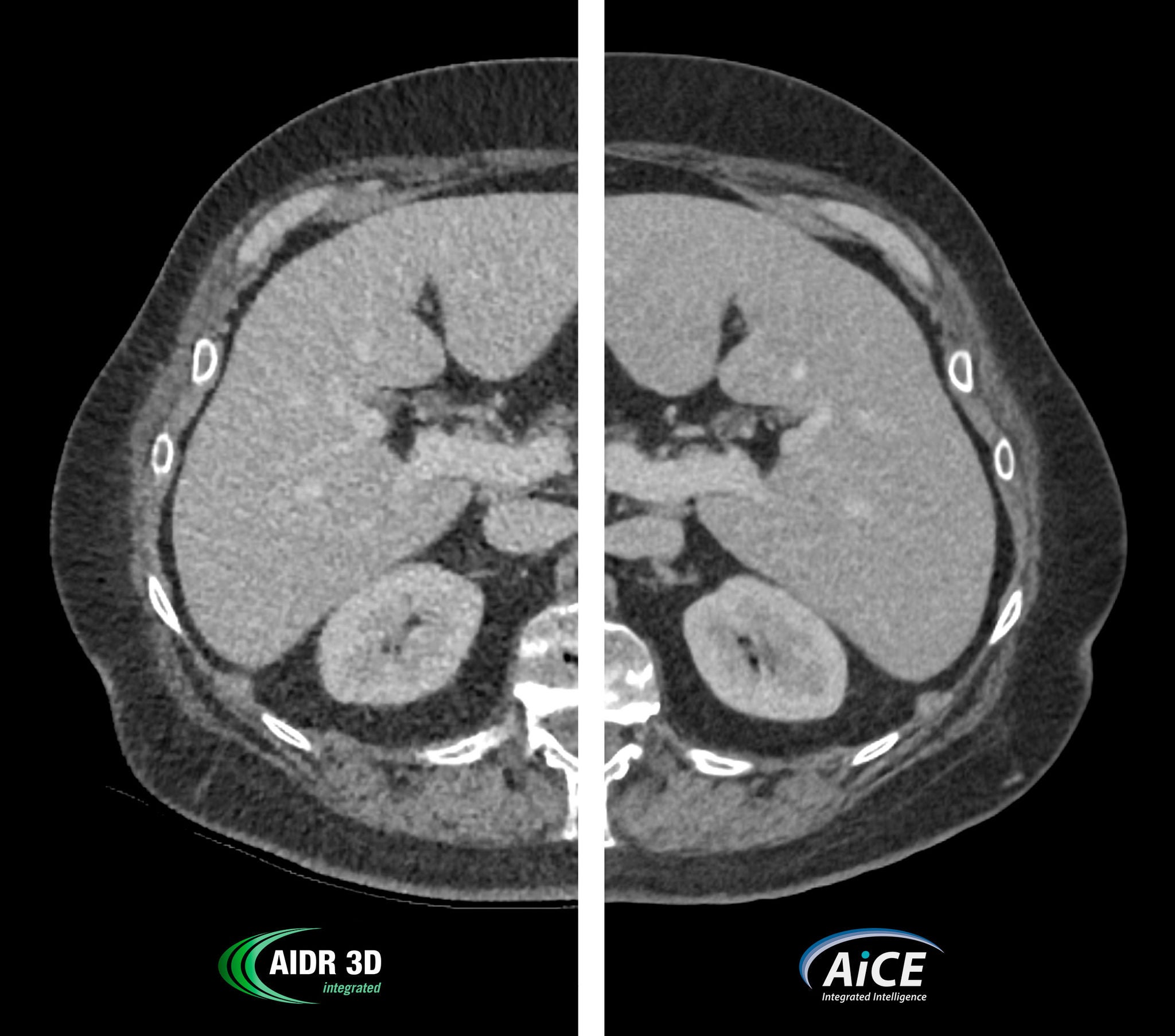
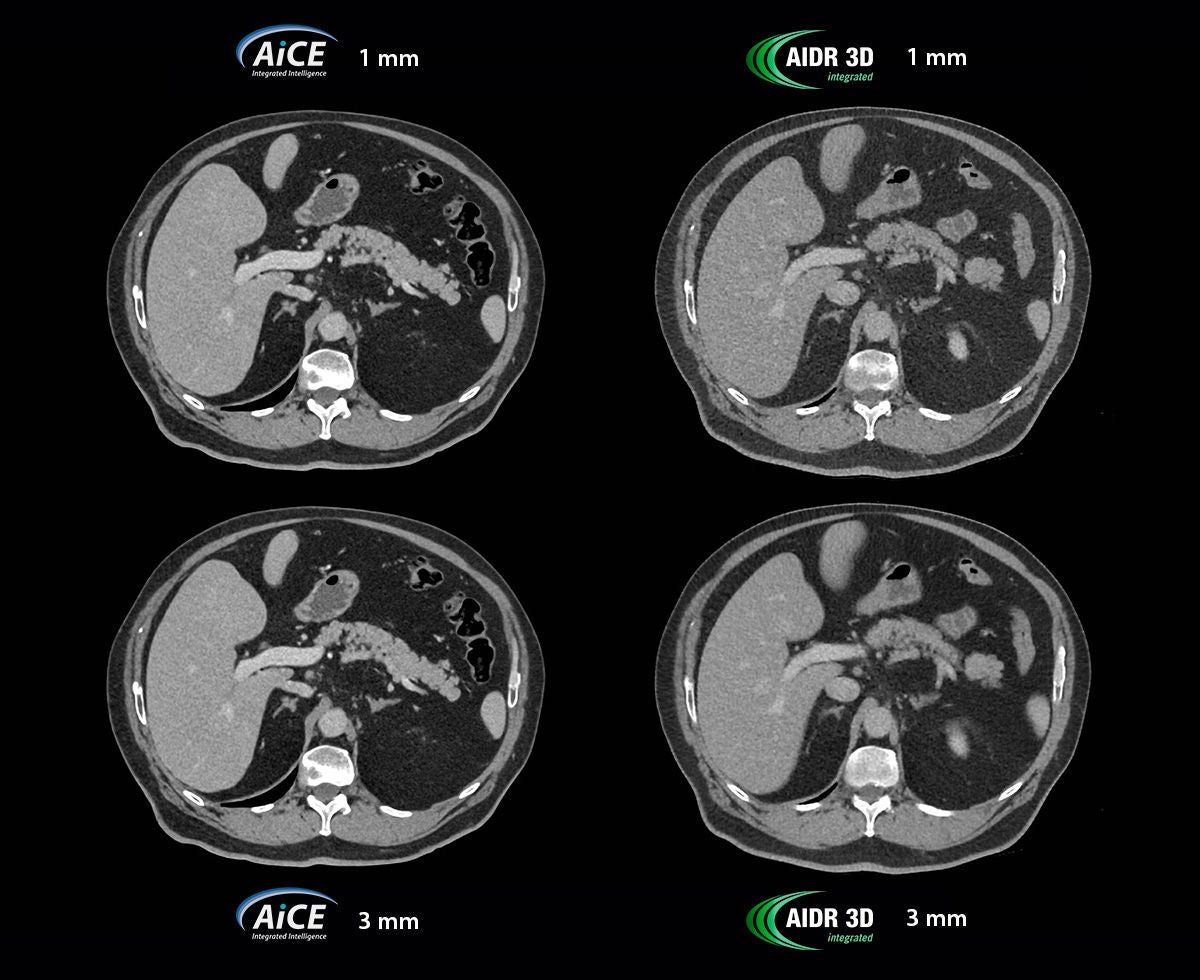
Training AiCE
The AiCE DLR is trained with high quality, advanced MBIR target images and learns to turn low-quality input data into low noise images that are sharp and clear. While in development, the AiCE DLR algorithm is taught to produce high signal-to-noise ratio (SNR) images through an intense training process. AiCE learns to differentiate signal from noise by training on selected, high-quality patient data sets that acquired with high tube current and reconstructed with all the benefits of state-of-the-art MBIR—including sophisticated system- and noise models, as well as a large number of iterations that are not possible clinically. As this time-consuming training process is completed before leaving the factory, the fully-trained AiCE DLR is able to work quickly in the clinic.
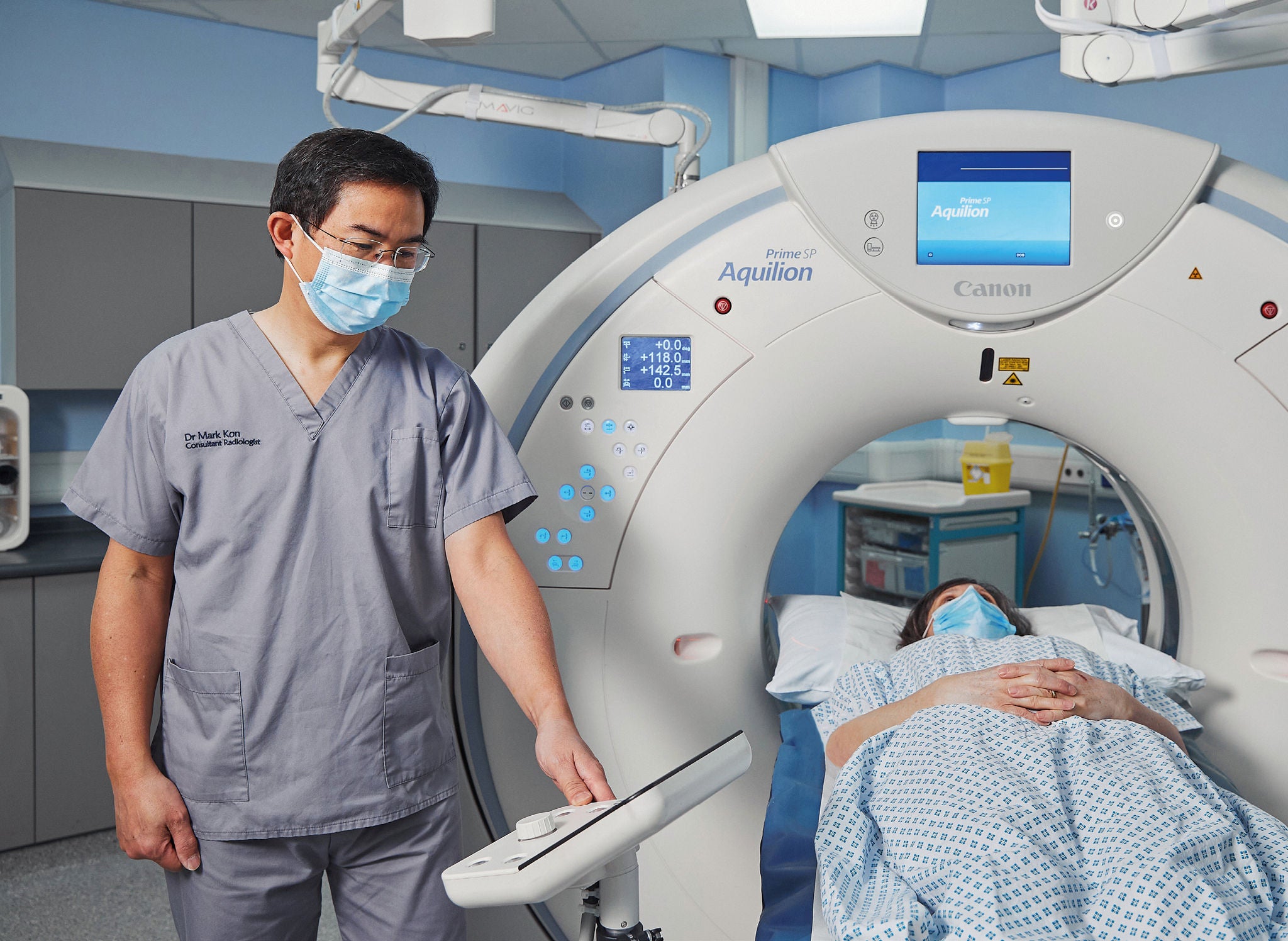
“With AiCE and a new PACS system, we only have to access one series of 1mm axials.”
Dr. Mark Kon, Consultant Radiologist at the Bradford Royal Infirmary, UK.
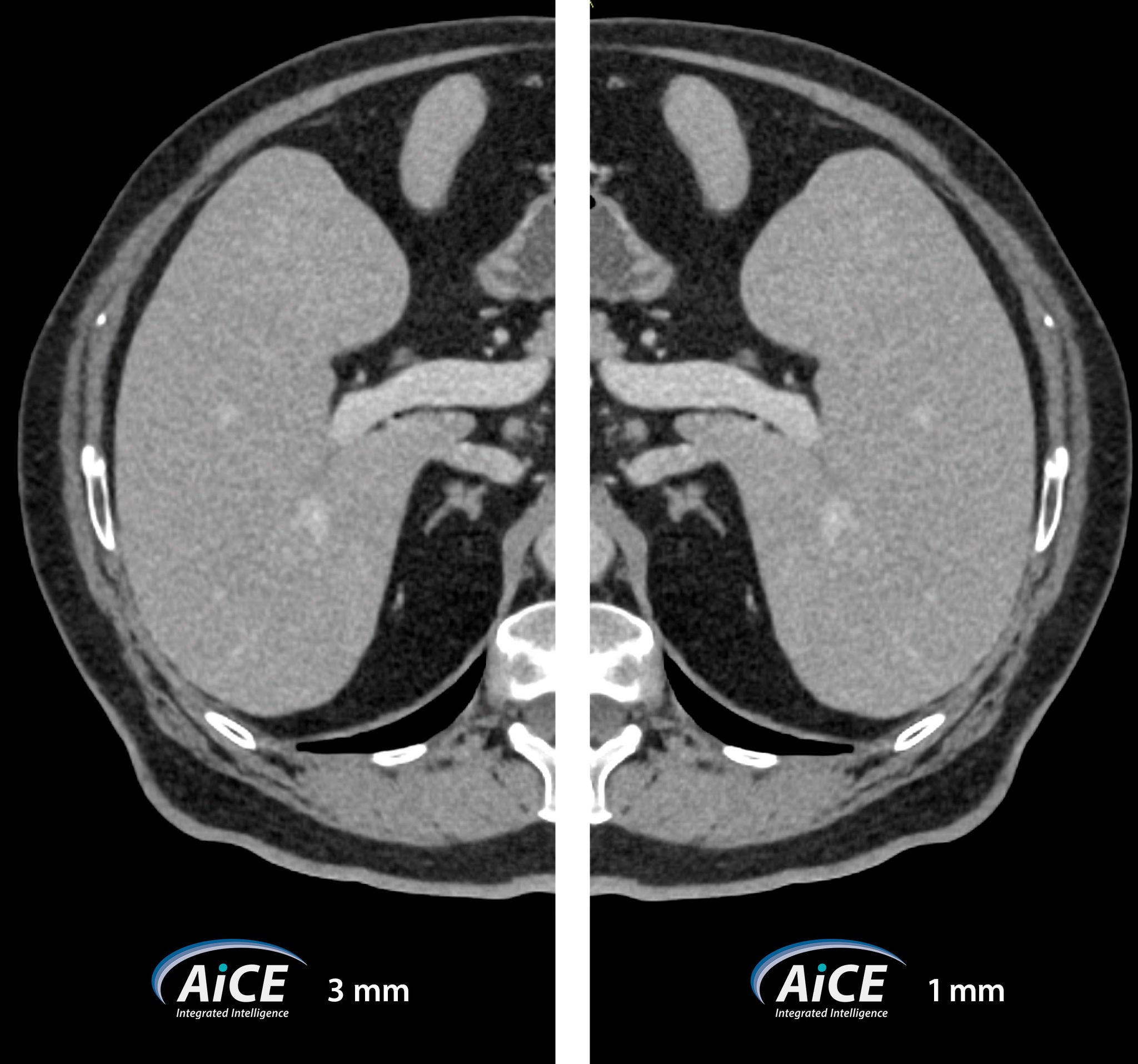
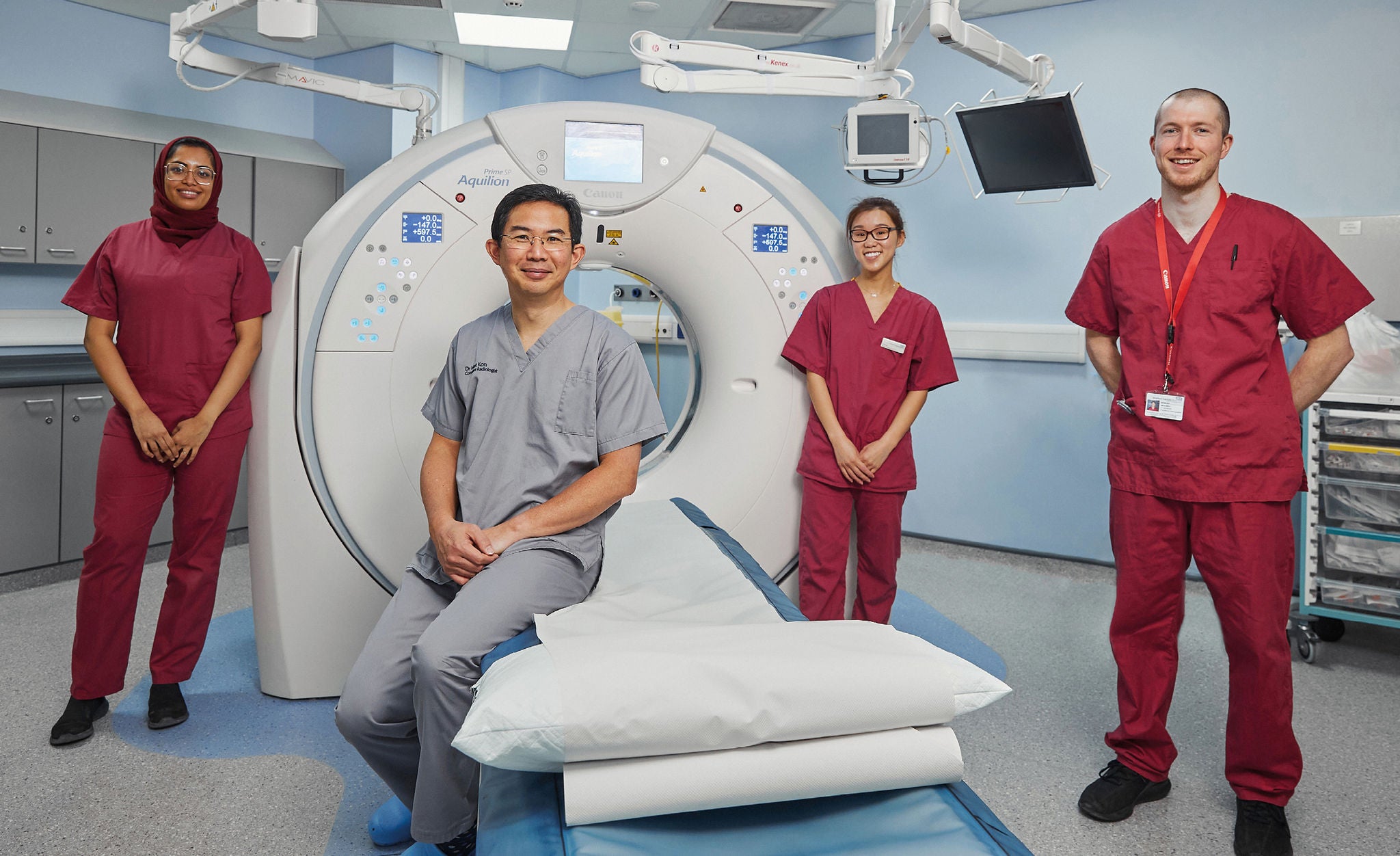
 Bradford Royal Infirmary, UK.
Focused imaging
The low dose imaging achievable with AiCE enables Dr. Kon and his team to answer specific clinical questions with the lowest dose possible. “We use AiCE everyday for noise-free reconstruction, and to reduce radiation dose in every acquisition. Importantly, AiCE has enabled us to improve workflow for radiologists and has even encourages us to change the way we think by focusing our imaging on answering even more specific clinical questions,” said Dr. Kon. //
The content reflects information available at the time of publication and may differ from current information.
Social Media


